Showing posts with label Induction Billet heater Manufacturers. Show all posts

Tuesday, 9 February 2016

Induction Billet Heater Manufacturers

Manufactured to perfection, Stead fast is one of the excellent and leading Induction Billet Heater Manufacturers in India. Due to its high efficiency, consistent performance and longer functional life, the billet heating machine is highly reckoned in the global market. We have manufactured the billet machine for efficient heating of circular or square section billets. Our offered range of billet machine is widely used for forging application. This Induction Billet Heating Machine is stringently checked on several parameters like sturdiness, construction and efficiency.

We are offering Induction Billet Heater to our customers which are made by using a high quality of raw materials. These range of products can be customized as per our valued client specification across the globe.


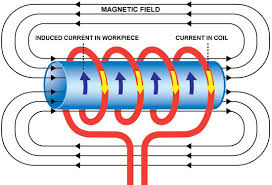
Induction heating is a non-contact process which uses the principle of electromagnetic induction to produce heat in a workpiece. By placing a conductive material in to a strong alternating magnetic field, electrical current is made to flow in the material, thereby causing joule heating. In magnetic materials, further heat is generated below the curie point due to hysteresis losses. The generated current flows predominantly in the surface layer, the depth of this layer being dictated by the frequency of the alternating field and the permeability of the material.

BENEFITS OF Induction Billet Heater

Process controllability
Unlike a traditional gas furnace the induction system requires no pre-heat cycle or controlled shutdown. The heat is available on demand. In addition to the benefits of rapid availability in the event of a down stream interruption to production the power can be switched off thus saving energy and reducing scaling on the components.

Energy efficiency
Due to the heat being generated within the component energy transfer is extremely efficient. The Induction Billet Heater heats only the part not the atmosphere around it.

Rapid temperature rise
High power densities ensure that the component reaches temperature extremely rapidly. This results in reduction of scale, surface defects and undesirable effects on the surface metallurgy.

Process consistency
The induction heating process produces extremely uniform consistent heat. This improves accuracy of the forging and can reduce post forging machining allowances and have a positive effect on die life. In conventional heaters i.e gas or coal fired burning losses are much higher may be 5 to 10% depending size of the work piece, but in Induction Billet Heater maximum burning loss is 1%.

About us :

Being one of a leading Induction Billet heater manufacturers we assure high quality at lowest price. Other than billet heaters, we are well know Induction furnace manufacturers. Our motto is to provide quality products and top class services.

Thursday, 4 February 2016

How to select Inductors for Billet heating ?

Induction heating is generally used to warm metals forging so as to precede hot shaping, annoying, moving, expulsion, and different techniques. Billets are warmed either in cut lengths or constantly and are produced in presses, mallets, or upsetters, or are expelled. Steel parts by a long shot speak to the lion's share of hot-shaped billets, albeit different materials counting titanium, aluminum, copper, metal, bronze, furthermore, nickel are additionally induction warmed for hot framing.

The introductory temperature of the billet before induction heating might be uniform (at encompassing temperature) on the other hand nonuniform. It is normally required to raise the billet's temperature to a predetermined level and degree of warmth consistency. The consistency prerequisite might incorporate greatest bearable temperature differentials — "surface-to-center," "end-to-end," and "side to-side."

A longitudinal warm inclination along the billet's length (profile heating) is here and there wanted when heating certain billets preceding their immediate or consistent Contingent on the application, powers from hundreds to a huge number of kilowatts and frequencies regularly in the line recurrence (50 to 60 Hz) to 3 kHz reach are the most normally utilized for induction heating of huge billets. The most well known billet-heating methodologies are dynamic multistage level heating and static heating. This section focuses on the advantages and disadvantages of each.

Two Approaches Compared

In dynamic multistage even heating, two then again more billets are moved (by means of pusher, indexing instrument, on the other hand strolling shaft, for instance) through a single loop or multicoil flat induction heater . Therefore, the billet is consecutively (logically) warmed at foreordained positions within the induction heater.


In static heating, a billet is put into an induction loop having a vertical or flat game plan for a given timeframe while a set measure of force is connected until it achieves the wanted heating conditions (temperature and level of consistency). The warmed billet is then removed from the inductor and conveyed to the framing station. Another cool billet is then stacked into the loop and the procedure rehashes. Either approach can utilize a defensive climate in the event that required.

Dynamic multistage level heating is prominent for little and medium-size billets (normally less than 6 in. [150 mm] in distance across). Whenever heating extensive breadth steel or titanium billets (8 to 12 in. [200 to 300 mm] and bigger), it is frequently invaluable to utilize static heating with a vertical loop game plan on the other hand a blend of the dynamic multistage level technique for preheating and the static vertical strategy for conclusive heating.

A steel billet being released in the wake of being statically warmed in a vertical inductor. Billet exchange, tipping, and charging instruments are situated beneath the stage and work as follows :

• Billets to be induction warmed are conveyed to the vertical cells by a trolley transport or roller track.

• The billet is then exchanged sideways by tipping the trolley stage or by an inclined occupying arm embedded into the roller track. The billet moves off into a moderate station and afterward onto a flat support.


• This support shapes part of a shaking holder which turns 90° and sets the billet vertically over a charging jack, which raises the billet vertically into the inductor. At the point when the heating cycle is finished, the control framework checks whether the press is prepared to acknowledge the billet. On the off chance that it isn't, the inductor changes its mode from heating to holding.

Displaying Can Save Time, Money

Experience picked up on past occupations and the capacity to PC model induction forms give a safe place when outlining new induction billet heating frameworks. This mix of cutting edge programming and a complex designing foundation empowers producers of induction heating gear to rapidly decide points of interest of the procedure that could be expensive, tedious, and, in a few cases, greatly troublesome, if not outlandish, to decide tentatively.


Evaluating software :

There are a few programming program accessible for demonstrating dynamic multistage level induction heaters. It is more hard to discover programming proper for PC demonstrating of static vertical billet heaters. To choose whether a system is suitable for demonstrating vertical heaters, its abilities must be altogether caught on. What takes after is an agenda of what clients should consider while assessing potential programming for demonstrating vertical billet heating frameworks:

• Electromagnetic end impact.

• Thermal edge impacts (Lambert's law and perspective components, for instance).

• Tight coupling of both electromagnetic and warm procedures. ("Regulated" coupling ought to be utilized. "Two-stage" coupling ought to be dodged since it doesn't give the precision required for generally applications.)

• Presence of warm protection, and the capacity to model warmth trade in the middle of unmanageable and warmed billet.

• Nonlinear interrelated nature of the material's physical properties.

• Specifics of loop windings and copper tubing.

• Surface misfortunes because of thermal radiation and convection.

• Presence of attractive flux concentrators, diverters, also, or flux extenders.

• Heat exchange between warmed billet and platform.

• Transient procedures ("chilly" and "warm" startup, also, a capacity to hold the warmed billet inside the induction loop if the framing machine is not prepared to acknowledge it).

• Possibility of the billet having a nonuniform beginning temperature conveyance before induction heating (for instance, the presence of outspread and longitudinal temperature slopes in the wake of penetrating or constant throwing).

• Cooling of the billet in air amid its exchange from inductor to shaping machine.


Who we are :


 We are leading Induction Furnace Manufacturers in India . provides world class induction heating and melting solutions for both ferrous and Non ferrous with a great focus on customization so that every machine is nothing less than perfect. Other than this we are also a leading Induction Billet heater Manufacturers. With a family of more than 400 satisfied customers all over the country and abroad, Stead Fast Engineers is expanding at a rapid pace. With offices located in major cities we ensure that the service is quick and effective and breakdown time is negligible.  

Tuesday, 12 January 2016

Induction Furnace manufacturers, exporters and suppliers


We are Stead fast Engineers , a leading Induction furnace manufacturing company in India, founded in 1990. we offers custom Heating and melting solution for ferrous and non ferrous Industries.

Our specialty :

- Provides Reliable, Economic and efficient Induction Furnace .
- our products have Highest efficiency, Low power consumption.
- optimum production
- design using futuristic trends
- design up-gradation to suit.
- trouble free operation.
- Our company specialize in quality Induction furnaces.
- power range is from 40 kw to 20000 kw .

We supply, Export and manufacturing wholesale Induction furnaces. Induction furnace available with PLC and digital controlled , control panel. Production capacity is 25-30 furnace per month.


Our products :

Stead Fast Engineers is pioneer in manufacturing Induction furnace under the brand name stefen capacity ranging from 20 kg to 20,000 kg.

Our Induction furnace are :
corrosion Resistance
high performance
Ease in operation
Durability

Types of Induction furnace :

Induction melting furnace
Induction heating system
Induction spares
Induction Furnace lining machine

product features :

Highest efficiency of power supply
lower cost
constant full power from start to end
accurate, diagnostic with easy to read fault indication and limits.
Heavy duty, Higher efficiency
Advanced rugged Semiconductors are chosen for better re liabilities.
Fast protection System.
Guaranteed melt rate

Our Success Story :

we are fastest growing Induction furnace manufacturing company. In our years of experienced , we Installed more than 1000 furnaces . We are No. 1 in some location.


We supply Furnaces to the Automobile industries centrifugal casting Non ferrous casting industries, steel plant. http://www.steadfastengg.com/

Sunday, 20 December 2015

World Best Induction Melting furnace

Stead Fast Induction melting Furnace are designed for maximum electrical efficiency using heavy walled, high electrically conductive copper tubing. Stead Fast Engineers manufactures world class induction melting furnaces under the brand name 'STEFEN'. STEFEN Quick melt and Smart melt furnaces are designed to increase the customer’s profitability and improve his market credibility by minimizing down time. Stead Fast furnaces are designed to provide world class induction heating and melting solutions for both ferrous and Non ferrous with a great focus on customization so that every machine is nothing less than perfect.


Stefen Box Type Induction Furnace :


  • Available from 50kg to 1000kg
  • Suitable for small and medium foundries for melting of ferrous and non ferrous material
  • Rolled Aluminum side plates for better flux shielding
  • Rigid Cradle Design
  • High purity EC Grade copper coil for better efficiency
  • Very easy to install, operate and maintain
  • Negligible Breakdown
  • High performance guarantee


Stefen Steel Shell Type Induction Furnace :


  • Rugged and Heavy duty Steel frame provides tension free support to the coil
  • Large Shunts made from CRGO imported steel provide low resistance flux path leading to higher efficiency
  • Easy access to coil leading to easy maintenance
  • 3D Designed and Load tested
  • Optional Fume extraction system


Stefen Push-Out Furnace :


  • Trouble free Operation
  • For small capacity of 2kg to 50 kg
  • Crucible is pushed out hydraulically in a smooth motion
  • Compact system


Stead Fast Engineers has a team of skilled engineers having vast experience and technical know-how in the induction field. With a wide range of products Stead Fast has emerged a pioneer in the induction world. for more product Details Visit : http://www.steadfastengg.com/

Thursday, 3 December 2015

Unique Technology for Induction Billet Heaters

Induction forging alludes to the utilization of an induction heater to pre-heat metals preceding distortion utilizing a press or sledge. Regularly metals are heated to somewhere around 1,100 and 1,200 °C (2,010 and 2,190 °F) to expand their flexibility and help stream in the forging bite the dust.

Induction heating is a non-contact process which utilizes the standard of electromagnetic induction to create heat in a work piece. By setting a conductive material into a solid rotating attractive field, electric current is made to stream in the material, along these lines creating Joule heating. In attractive materials, further heat is produced underneath the Curie indicate due hysteresis misfortunes. The created current is relevantly in the surface layer, the profundity of this layer being directed by the recurrence of the exchanging field and the porousness of the material.

Billet Heating :

In the induction billet heater the entire of the billet or slug is heated. Ordinarily for short billets or slugs a container or dish is utilized to consequently display the billets in line to squeeze rollers, chain driven
tractor units or at times pneumatic pushers. The billets are then determined through the loop one behind the other on water cooled rails or earthenware liners are utilized through the curl bore which decrease contact and anticipate wear. The length of the curl is an element of the required drench time, the process duration per segment and the length of the billet. In high volume extensive cross area work it is not bizarre to have 4 or 5 curls in arrangement to give 5 m (16 ft) of loop or more. 

Common place parts handled by in line billet heating:

 Little crankshafts
 Camshafts
 Pneumatic and pressure driven fittings
 Sledge heads
 Motor valves
 Single shot

shot billet heating:

For long billets, single shot heating can be utilized. This procedure uses comparable frameworks to bar end heating aside from that the entire of the billet is crashed into individual loops. Likewise with bar end heating the quantity of curls is administered by ΔT required and the warm properties of the material being heated. Run of the mill parts prepared by single shot billet heating:
 Lorry axles
 Marine camshaf


Induction Billet Heatering Systems :

Stead Fast Engineers supply a broad range of induction billet heating systems for virtually all forge heating applications. Advantages of our induction billet heaters include:
• High efficiency
• Proven Design
• Reduced customer start up time
• Forge shop proven
• Excellent customer reference list
• Advanced PLC control, power & temperature control
• Quick release connections for both power & water
• World wide customer service support
• Reliable
• Heavy Duty Construction, for toughest forging conditions
• IGBT (Insulated Gate Bi-Polar Transistor) Design

Manufactured to perfection, we are one of the excellent and leading exporters of Induction Billet Heating Machine. Due to its high efficiency, consistent performance and longer functional life, the billet heating machine is highly reckoned in the global market. We have manufactured the billet machine for efficient heating of circular or square section billets. Our offered range of billet machine is widely used for forging application. This Induction Billet Heating Machine is stringently checked on several parameters like sturdiness, construction and efficiency.
For more Information Visit Our website : http://www.steadfastengg.com/

Wednesday, 2 December 2015

How does Induction heating Work ?

 Introduction :

Induction heating is a precise, quick, repeatable, proficient, non-contact strategy for heating metals or some other electrically-conductive materials.

An induction heating framework comprises of an induction power supply to convert line energy to an exchanging current and conveying it to a workhead, and a work loop for creating an electromagnetic field inside of the curl. The work piece is situated in the curl such this field prompts a current in the work piece, which thusly delivers heat.

The water-cooled loop is situated around or circumscribing the work piece. It doesn't contact the work piece, and the warmth is just delivered by the actuated current transmitted through the work piece. The material used to make the work piece can be a metal, for example, copper, aluminum, steel, or metal. It can likewise be a semiconductor, for example, graphite, carbon or silicon carbide.
For heating non-conductive materials, for example, plastics or glass, induction can be utilized to warm an electrically-conductive susceptor e.g., graphite, which then passes the warmth to the non-directing material.

Induction heating discovers applications in procedures where temperatures are as low as 100ºC (212°F) and as high as 3000°C (5432°F). It is likewise utilized as a part of short heating procedures going on for not as much as a large portion of a second and in heating procedures that stretch out more than a while.

Induction heating is utilized both residential and business cooking, in a few applications, for example, warmth treating, fastening, preheating for welding, melting, therapist fitting in industry, fixing, brazing, curing, and in and in research and development.

How Does Induction Heating Work?

Induction produces an electromagnetic field in a coil to transfer energy to a work piece to be heated. When the electrical current passes along a wire, a magnetic field is produced around that wire.

Key Benefits of Induction :

 The benefits of induction are:
 Efficient and quick heating
 Accurate, repeatable heating
 Safe heating as there is no flame
 Prolonged life of fixturing due to accurate heating
 Methods of Induction Heating

Induction heating is done using two methods:

The first method is referred to as eddy current heating from the I²R losses caused from the resistivity of a work piece’s material. The second is referred to as hysteretic heating, in which energy is produced within a part by the alternating magnetic field generated by the coil modifying the component’s magnetic polarity.

Hysteretic heating occurs in a component up to the Curie temperature when the material’s magnetic permeability decreases to 1 and hysteretic heating is reduced. Eddy current heating constitutes the remaining induction heating effect.
When there is a change in the direction of electrical current (AC) the magnetic field generated fails, and is produced in the reverse direction, as the direction of the current is reversed. When a second wire is positioned in that alternating magnetic field, an alternating current is produced in the second wire.
The current transmitted through the second wire and that through the first wire are proportional to each other and also to the inverse of the square of the distance between them.
When the wire in this model is substituted with a coil, the alternating current on the coil generates an electromagnetic field and while the work piece to be heated is in the field, the work piece matches to the second wire and an alternating current is produced in the work piece. The I²R losses of the material resistivity of the work piece causes heat to be created in the work piece of the work piece’s material resistivity. This is called eddy current heating.

Working of an Induction Coil

With the assistance of a rotating electric field, vitality is transmitted to the work piece with a work coil.
The rotating current passing through the coil delivers the electromagnetic field which instigates a present going in the work piece as a mirror picture to the present going in the work coil. The work coil/inductor is a piece of the induction heating framework that shows the viability and proficiency of the work piece when it is warmed. Work coils are of various sorts running from complex to basic.
The helical injury (or solenoid) coil is an illustration of basic coil, which comprises of numerous turns of copper tube twisted around a mandrel. A coil accuracy machined from strong copper and brazed together is a sample of complex coil.

About us : 

A good induction furnace manufacturer is not just a company that makes the furnace. A good manufacturer will provide other services to assist the equipment’s purchaser into the future. If you are looking for Induction Furnace Manufacturers providers and exporters, then your search ends here.stead Fast Engineers Pvt Ltd is a one of the leading manufacturers in India where you can Get Best Induction furnace. we provide various type of heating and melting equipments . visit for more detail : http://www.steadfastengg.com/

Friday, 20 November 2015

Introduction to Modern concept of Steel Making through Induction Furnaces

l . Introduction

The different sorts of Induction Furnaces utilized for Steel making are medium frequency and high frequency. Gentle steel, Stainless Steel and low and high combination Steel can be produced using this furnaces. Crude materials utilized are Steel dissolving Scrap and Direct Reduced Iron. Alloying components included according to prerequisite.


2. Brief history of making steel by Induction Furnaces course

2.1 In India we began utilizing Mains Frequency Induction Furnaces from mid?sixties and medium frequency imported induction furnaces from mid-seventies however a sudden development occurred from mid eighties upto mid?nineties when indigenous production of Induction Furnaces initiated. At first we were utilizing them for using so as to dissolve and making Stainless steels imported stainless steel scrap yet economic situation from mid-eighties urged business people to make gentle steel. On the other hand, after liberalization there was extensive increment in the quantity of induction furnaces furthermore limit per charge. Presently a-days, furnaces upto a most extreme of 16-ton/charge are being utilized.

3. Current status of Induction Furnaces

3.1 Modernisation has been did by utilizing refining, hardware and in addition ceaseless casting of billets. To make great nature of gentle steel, refining by utilizing (LRF) scoop refining furnaces are being used and for production of stainless steel, AOD refining vessels are utilized. It is fitting to utilize family synthetic sythesis medium and substantial steel softening scrap. Preceding creation of Direct Reduced Iron (DRI), it was hard to control science of melt however now the innovation of utilizing DRI to modify science has been comprehended. Carbon would he be able to balanced according to particular and tramp components are controlled in light of the fact that DRI does not have tramp metals and components.


4. Why steel in India is produced using I.F. course ?

4.1 India is the first nation utilizing Induction Melting Furnaces for making mellow steel. In actuality, EAFs are not making mellow steel of basic quality for over 10 years now. The heft of basic quality mellow steel for long items is made by Induction Melting Furnaces. Amid 2001?2002 period more than 4.5 million tons of steel were created by Induction Furnaces. The EAF units have likewise introduced Induction Melting Furnaces. There are a few explanations behind the fame of Induction Melting Furnaces for making steel. They expend less power contrasting EAFs. Consumption on terminal is nil. They utilize lesser amount of stubborn. Introductory speculation is less on plant and hardware. Accordingly, there are financial points of interest in making steel through Induction Furnaces course. The main tangle is that at present mass amount steel can't be delivered through Induction Furnace course. May be that in future it might be conceivable to do as such.


5. Smaller than normal coordinated steel plant idea

5.1 another pattern of making steel in India is developing. This new innovation is utilizing Direct Reduced Iron (DRl) - Induction Melting Furnaces (vast limit) Continuous Casting of Billets or Rolling Mills to Make Billets and Bars, Fods and Sections.

5.2. At first M/s Essar Gujarat introduced DRI unit and utilized EAF (150 tons) to make steel for level items. Some all the more such steel plants have been introduced. Some unmistakable DRI makers have likewise introduced Induction Melting Furnaces to make gentle steel ingots or billets. Amid the last a few years numerous DRI making plants have been introduced in States like Chattisgarh (cut Out of Madhya Pradesh), Jharkhand (cut out of Bihar), Orissa and West Bengal differing from 20,000 tons upwards. These states are rich in Iron metal and coal. Amid DRI making from coal, waste gasses turning out are rich in carbon monoxide/dioxide, Methane?Ethane, and so on., and henceforth have parcel of calorific qualities to produce influence taking and by amount of influence from State Electricity Boards and utilizing its own particular created influence, DRI plants are introducing different limit Induction Furnaces. Some have likewise descending manufacturing units like concast or moving factories. Accordingly a kind of Mini Integrated Steel Plants are coming up. This innovation is quick getting to be well known and may alter our old and set up idea of making steel. The mellow steel delivered by such plants is modest and of good duality. Notwithstanding, much will rely on economies of generation and business sector strengths. Numerous, different advances are coming up which all have introduction to nearby conditions and assets accessibility. Induction Furnaces industry needs to confront numerous difficulties in this period of rising new innovations for making steel.


6. Different sorts of steel and cast iron creation by I.F.

6.1 Mild Steels: with a specific end goal to control science of finished item, compound investigation of all info metallic is taken before winding the charge-blend. After half charging is finished a shower test is
sent to research facility. The synthetic examination is analyzed, computations made tin further augmentations are made of info metallics. On the off chance that it has high carbon, Sulfur and phosphorous, rate Sponge iron in the charge is expanded. At the point when 80% softening is finished a last shower test is taken. In the event that carbon is still high a greater amount of wipe iron fines are charged in the event that carbon is less, cast iron scrap and turnings are charged. Along these lines, the science is controlled. Since no
overwhelming arcing like Electric Arc Furnace:; happens in Induction Melting Furnaces, the oxidation of iron a great deal less and misfortunes are likewise insignificant. Silicon a Manganese in metal are oxidized by FE2 O3 and FeO Carbon is lessened by iron oxide of DRI. Sulfur and phosphorous are weakened by DRI. There are no cable car components in the last item.

6.2 Low Alloy Steels :
6.2.1 At present Low composite steels are by and large frequently created by Induction Furnace Units in India. The incorporate EN18, EN19, EN8, EN9, and so on. Compound arrangement is entirely controlled by utilizing spectrometer. Size of ingots differs 3½ x 4½ to as much
6 ½" x 7½". So far none of the Induction Furnaces units have delivered these steels by concast prepare however some Induction Furnaces units are introducing spoon refining and concast gear to make concast billets.
6.3 Stainless Steels :
6.3.1 Induction Melting Furnaces before making Mild Steel ingots began creating Stainless Steel subsequent to 1979?80 period utilizing little size Induction Furnaces. The crude material was foreign made SS scrap and purging so as to cast ingots fluid metal in spoon, including alloying components and so on and softening mellow steel scrap and including ferro?allow and exchanging the fluid metal to AOD vessels for refining. After AOD treatment a few units do further refining in LRF and afterward creating billet by concast process. All units having scoop refining framework have introduced spectrometer for exact and faster shower investigation. Gas levels such N2H2 and O are additionally dictated by the recently introduced instruments. The greater part of the Induction Furnaces units are creating utensils grade SS. Two Induction Furnaces units making SS have sent out bars and wires. More butt-centric more Induction Furnace units are modernizing and also expanding to esteem included items.

6.4 Grinding Media :
6.4.1 Five Induction Furnace units are creating Grinding Media MnCr5, 20 MnCr5, and so forth situated at Ghaziabad. Jhansi, Ahmedabad and Bangalore. what's more, trading. It meets the quality prerequisites of world standard.

6.5 Special Cast Iron and S.G. Iron castings:
6.5.1 While numerous cast iron casting foundries have introduced mains frequency Induction Furnaces to make exceptional cast presses, some have introduced medium frequency Induction furnaces to make
S.G. iron. These foundries have compound testing, sand testing and physical testing gear alongside ultrasonic testing supplies. It is learnt that these Induction Furnace units have traded unique Cast iron and SG iron worth crores of rupees throughout the years.


7. Conclusion


7.1 Steel making procedure is tinder going extensive changes, New procedures are being created to utilize different sorts of Iron metals, coal and gas. Iron metal fines are utilized for making Pig Iron. These are produced by European Countries, In India National Mineral Development Corporation have a concurrence with Russia to receive Romalt process by utilizing fines of Iron metals. Ideally the generation will start without further ado. Jindal's have bought an innovation called Corex process. Steel has been delivered effectively by Jindal's. It is to be seen whether new procedures are econornicaly feasible contrasting with old frameworks i.e. Coke over, Blast furnaces, steel making by BOF converters' M/s Usha Martin organization are making pig iron in cupela and it is charged hot in Electric Arc Furnace to mak steel. Every one of these procedures trim to make less expensive steel and discussion of vitality. Duplexing and Tripplexing procedure is may get to be important to make steel in future.

About Stead Fast Engineers Pvt Ltd :


Established in 1990, Stead Fast Engineers Pvt Ltd is an engineering company engaged in designing and manufacturing of Induction Melting furnaces, Induction Billet Heaters and Refractory Lining Machines for Foundries, Steel Plants and Forging units. With the help of years of experience and a highly skilled team, we create products with attention to every minute detail thereby making the products both user friendly and economical.  http://www.steadfastengg.com/

Friday, 13 November 2015

INTRODUCTION AND PRINCIPLE OF INDUCTION FURNACE

The electric induction furnace is a kind of melting furnace that uses electric streams to liquefy metal. Induction furnace are perfect for liquefying and alloying a wide assortment of metals with least soften misfortunes, be that as it may, small refining of the metal is conceivable.
The principle of induction heating is mainly based on two phenomena:
1. Electromagnetic induction
2. The Joule effect
1) ELECTROMAGNETIC INDUCTION :
The transfer of energy to the object to be heated occurs by method of electromagnetic induction. ​Any electrically conductive material put in a variable attractive field is the site of induced electric current.
b1

2) JOULE HEATING :
​Joule heating, also known as ohmic heating and resistive heating, is the process by which the passage of an electric current through a conductor releases heat. The heat produced is proportional to the square of the current multiplied by the electrical resistance of the wire. ​

Star Point : 
Induction heating depends on the one of a kind qualities of radio frequency (RF)energy that divide of the electromagnetic range underneath infrared and microwave energy. 
Since heat is exchanged to the item by means of electromagnetic waves, the part never 
comes into direct contact with any fire, the inductor itself does not get hot and there is no item tainting. Induction heating is a quick, clean, non-contaminating heating. 
The induction coil is cool to the touch; the heat that develops in the coil is always 
cooled with flowing water.

Stead Fast Engineers Pvt Ltd is an engineering company engaged in designing and manufacturing of Induction Melting furnaces, Induction Heater and Lining Machines for Foundries Steel Plants and Forging Plants. http://www.steadfastengg.com/